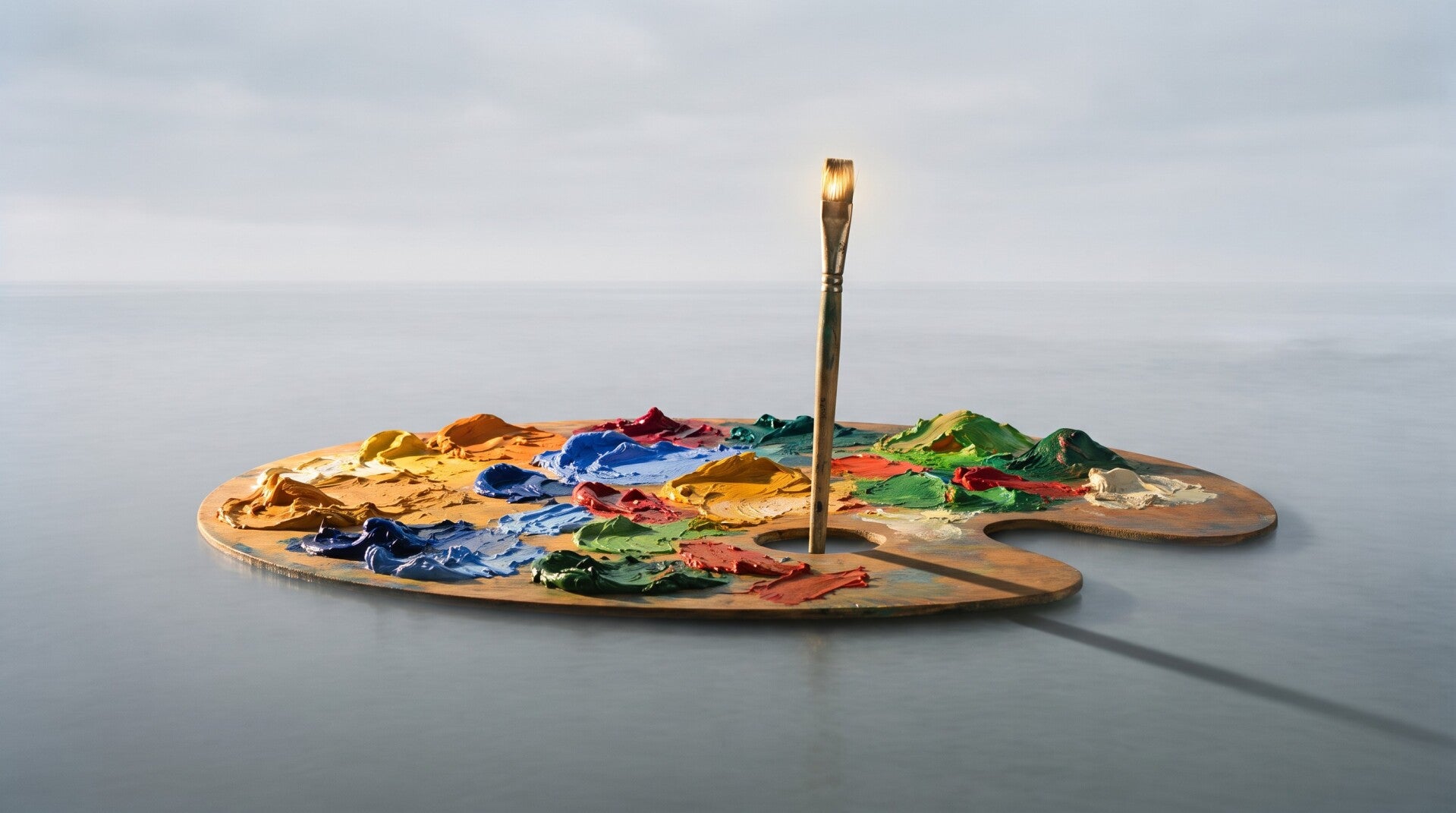
Belgium 1830–2030: Belgian Art

From Ensor’s masks to Magritte’s pipe, Belgian art has often been strange, sharp and free. Expect Victor Horta’s Art Nouveau lines, Constantin Meunier’s workers as heroes, Félicien Rops mocking hypocrisy, Paul Delvaux’s silent stations, Marcel Broodthaers’ poems in plaster and Panamarenko’s flying machines.

René Magritte and the Pipe That Isn't a Pipe

The Treachery of Images (La Trahison des images) is a remarkable painting created in 1929 by the Belgian artist René Magritte. The artwork features a realistic depiction of a pipe alongside the phrase 'Ceci n'est pas une pipe', which translates to 'This is not a pipe.' This statement encapsulates the essence of the painting’s message: while it visually represents a pipe, it is ultimately just a painted image and not a functional object. Through this apparent contradiction, Magritte challenges viewers to question their assumptions and to consider images more critically.

Read more »

Constant Permeke and the Myth of Latem's Light

Constant Permeke (1886–1952) lived in Sint-Martens-Latem from 1909 to 1912 but did not find his style there: at the time he painted under the spell of Emile Claus's Luminism. His heavy, unvarnished depictions of farmers and fishermen emerged only after the First World War, in England, Ostend, and, from 1929, Jabbeke. Flemish Expressionism, the movement Permeke came to lead, is a 1920s Belgian art movement that painted rural life in dark earth tones and simplified, massive forms.

Read more »

La Muette de Portici: the opera that made Belgium rise

La Muette de Portici is an 1828 opera by the French composer Daniel Auber about a popular uprising in Naples. After a performance at the Théâtre de la Monnaie in Brussels on 25 August 1830, the audience poured into the streets and started the riots that led to Belgian independence. Yet the opera did not set off that revolution by accident: the anger was already there, and the date had been announced in advance.

Read more »

James Ensor's Masks: What Do They Really Reveal?

James Ensor (1860–1949) was a Belgian painter and printmaker from Ostend who used carnival masks from his family's souvenir shop to unmask society. For him, a mask was not a disguise but a magnifying glass: it shows what a polite face hides, such as herd behaviour, dogma and hypocrisy. His masterpiece, Christ's Entry into Brussels in 1889 (1888), was first shown in public in 1929.

Read more »